Driving the Appian Way: what to see and where to stop
The road that leaves Rome and does not come back
The Appian Way was opened in 312 BC by the censor Appius Claudius Caecus, to move armies south. The Romans called it regina viarum, the queen of roads, and it is the only one of them you can still drive on the original surface — black basalt blocks laid by hand, worn into ruts by two thousand years of iron-rimmed wheels.
It was inscribed as a UNESCO World Heritage site in 2024, which changed nothing about how it feels. It is still a narrow country lane lined with umbrella pines and broken tombs, ten minutes from the Colosseum, where you can hear birds instead of traffic.
For a visitor with a car, it is the single most rewarding half hour of driving anywhere near Rome. It is also the natural way out of the city towards the hills, which is how the Romans used it in the first place.
What you pass, in order
Porta San Sebastiano is where the road leaves the Aurelian Walls: the largest and best-preserved of Rome's ancient gates, with a small museum inside the walls themselves.
Domine Quo Vadis, a short way on, is a tiny church built where Saint Peter, fleeing Rome, is said to have met Christ walking the other way and asked the question that gives the church its name. It takes five minutes and it is worth stopping.
The catacombs of San Callisto and San Sebastiano are the two great underground burial complexes, kilometres of tunnels on several levels. Visits are guided and ticketed, and they close on different days of the week — check before you plan around them.
The Circus of Maxentius is the best-preserved Roman circus anywhere, a chariot-racing track in open grass with the starting gates still legible. Almost nobody stops here, which is precisely why you should.
The tomb of Cecilia Metella is the round drum that everyone photographs: a wealthy Roman woman's mausoleum, later fortified into a castle. This is where the road changes.
Beyond Cecilia Metella the modern asphalt ends and the original basalt begins. Tombs, columns and fragments of statuary stand along both sides in the grass. This stretch is the reason to come, and it goes on for kilometres.
Villa dei Quintili, a little further out, is a vast imperial villa with its own baths and aqueduct, seized by the emperor Commodus from the brothers who built it — for the straightforward reason that he wanted it.
When to go, and the Sunday trap
Do not plan to drive the Appian Way on a Sunday. The historic stretch is closed to traffic on Sundays and public holidays and given over to walkers and cyclists. It is wonderful on foot and impossible by car — plan accordingly, in either direction.
Early morning is the best light and the emptiest road. Late afternoon comes second, when the pines throw long shadows across the basalt.
Spring and autumn are ideal. In midsummer, go early: there is no shade on the open stretches and the stone holds the heat.
Driving it: what nobody tells you
The original paving is rough. Genuinely rough — polygonal basalt blocks with gaps and ruts. You drive it at walking pace, and that is part of the pleasure, but do not expect to make progress.
The road is narrow and two-way, with stone walls on both sides and no verge. Meeting an oncoming car means one of you reverses to a gap. This is normal and nobody minds.
Parking is informal. There are gravel pull-offs at the main sites; between them you park on the grass edge, sensibly.
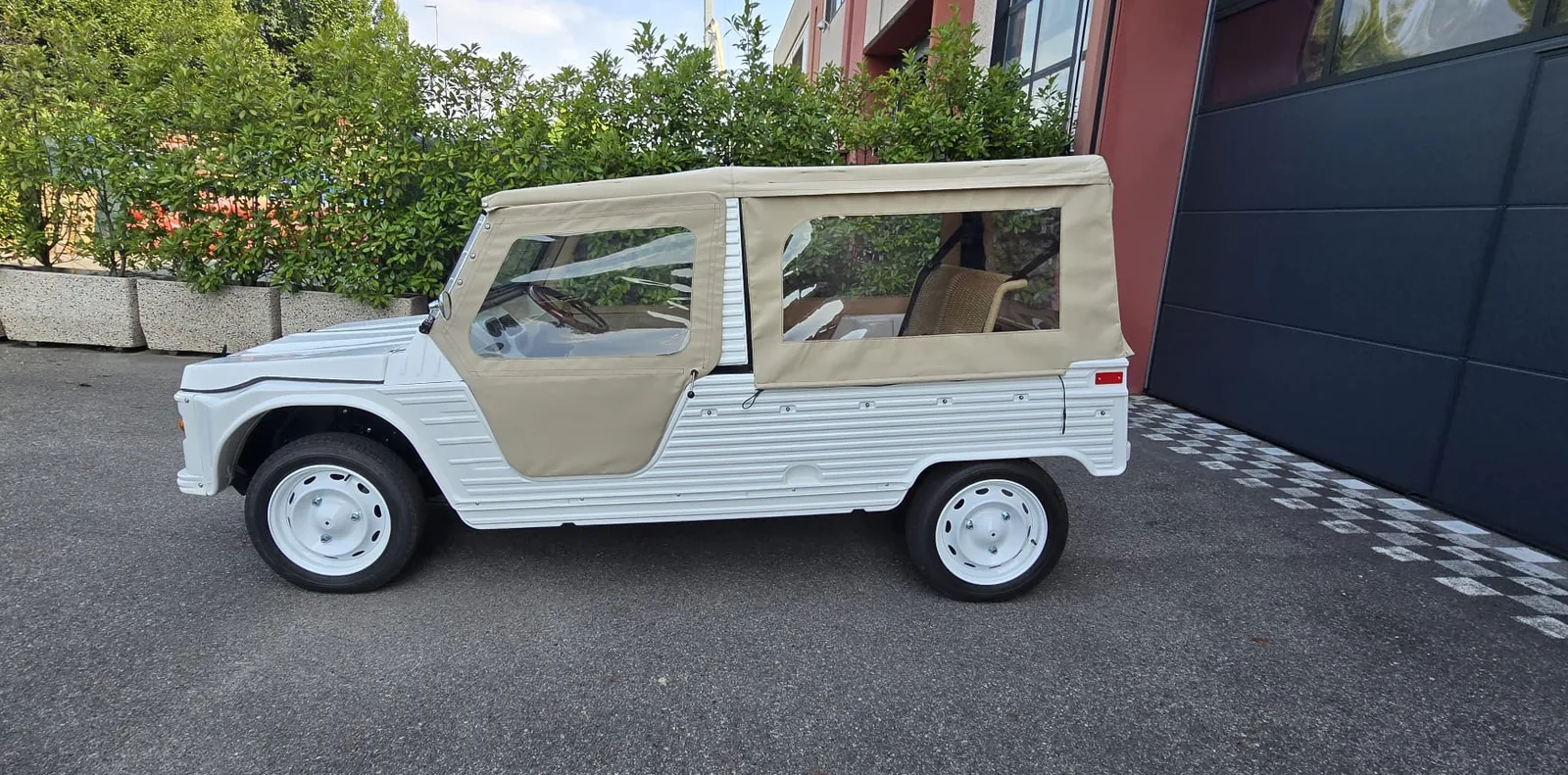
A small, narrow, open car is the right tool. Anything large is a liability on the ruts, and anything closed cuts you off from the one thing you came for — the sound of a road with no traffic on it.
Where it takes you
The Appian Way is not a destination in itself. It is the beginning of a day. Follow it out and it delivers you to the edge of the Alban Hills, where the road climbs towards Castel Gandolfo, the volcanic lakes and the wine towns of Frascati and Grottaferrata.
Go out on the Appia in the morning, spend the afternoon on the hills, and come back down at sunset. That is the day the road was built for, minus the legions.
Practical answers
Can you drive on the Appian Way?
Yes, on the historic stretch, except on Sundays and public holidays when it is closed to traffic. Expect to move slowly on the original basalt paving.
How long is the Appian Way?
The ancient road ran over 500 km to Brindisi. The section that matters to a visitor is the first ten kilometres out of Rome.
Is the Appian Way free?
The road, the tombs along it and the Circus of Maxentius are free to walk past. The catacombs and Villa dei Quintili are ticketed sites with their own opening days.
How do I get to the Appian Way from central Rome?
It starts at Porta San Sebastiano, about ten minutes by car from the Colosseum, outside the limited traffic zone.
What is the best way to see the Appian Way?
On foot or by bicycle if you have half a day and only want the road itself. By car if it is the first leg of a longer day towards the hills — which is what it was always for.