Frascati wine day trip from Rome
The wine town that Rome drives to on Sundays
Frascati sits twenty kilometres southeast of Rome, high enough on the Alban Hills to look back at the city from above. Romans have been coming up here for the same three reasons since the Renaissance: the air is cooler, the wine is cheap and good, and the food is the kind you eat with your hands.
It is the easiest countryside escape from Rome — closer than Tivoli, less crowded than Ostia, and with a lot more to drink. If you only have one free day and you want to see what Italians do on a Sunday rather than what tourists do on a Tuesday, this is where you go.
What Frascati wine actually is
Frascati is a white wine, and for a long time it had a bad reputation abroad: mass-produced, thin, poured from anonymous carafes. That version still exists. The one worth crossing the hills for does not leave the area.
The grapes are Malvasia and Trebbiano grown in volcanic soil — the whole Alban Hills range is an extinct volcano, which is also why the two lakes nearby are perfectly round. Volcanic soil gives the wine a mineral edge that cuts through fat and salt, which is precisely why it is drunk with porchetta.
Look for Frascati Superiore DOCG on the label, and better still, drink it where it was made. The small family estates on the slopes below the town pour glasses for a few euros, and most will show you the cellar if you ask and if they are not in the middle of harvest.
What to see, and how long it takes
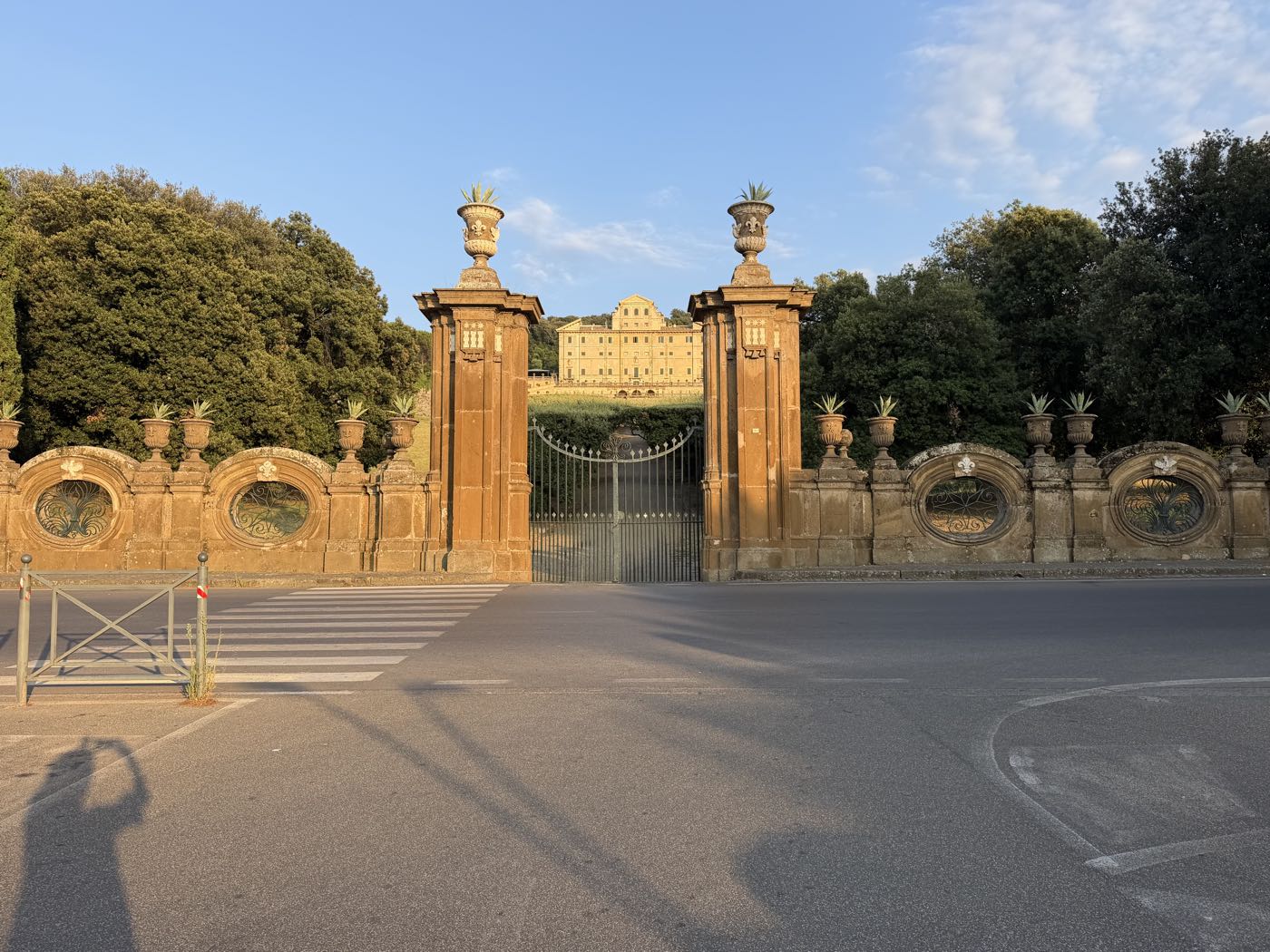
Villa Aldobrandini dominates the town from above — a seventeenth-century villa with a water theatre carved into the hillside behind it. The villa itself is private, but the terrace in front gives you the view that put Frascati on the Grand Tour: the whole Roman plain, with the dome of St Peter's floating in the haze. Twenty minutes, and worth every one.
Villa Torlonia park is what remains of another great estate, bombed in 1944 and now a public garden with the ruins of a water theatre among the trees. Locals walk their dogs here. Half an hour.
The cathedral of San Pietro holds a memorial to Bonnie Prince Charlie, the Stuart pretender to the British throne, who died in Rome and whose heart is buried here. It is a strange, quiet footnote of British history in a Roman wine town, and almost no visitor knows it is there.
The Scuderie Aldobrandini, the old stables, now house the archaeological museum of the area, with what was recovered from ancient Tusculum on the ridge above.
Then there is the ridge itself. Tusculum is a fifteen-minute drive up through chestnut woods to a Roman theatre and a view that reaches the sea on a clear day. It is the single best sunset in the Castelli Romani and it costs nothing.
Eating: the fraschetta
A fraschetta is not a restaurant. It began as a room where a wine producer sold his own wine, and where customers were allowed to bring their own food — the name comes from the branch, frasca, hung outside the door to signal that the new wine was ready.
Today most serve food as well, but the spirit survives: paper tablecloths, wine by the litre, and the local trinity of porchetta (whole roast pork, sliced thin, herby and fatty), coppiette (dried spiced pork strips, the original bar snack), and pizza bianca straight from the oven. You will spend fifteen euros and remember it longer than the meals that cost eighty.
Lunch runs late here. If you arrive at one, you are early.
When to go
September and October are the best weeks of the year: the harvest is on, the hills smell of fermenting grapes, and the light in the late afternoon turns everything gold. April to June is a close second, greener and quieter.
August is the one month to avoid — Rome empties into the coast, many family estates close, and the heat on the hills is real. Winter is underrated: cold, clear days give the sharpest views of Rome from the terraces, and the fraschette are warm and full of locals.
Any day but Monday, when much of the town closes.
Getting there
By train, trains leave Roma Termini for Frascati regularly and take around thirty minutes. The station is a short walk below the centre. This is the cheapest way and it works perfectly well — if Frascati town is all you want to see.
By car, it is thirty to forty minutes from central Rome, and it opens up everything the train cannot reach: the ridge at Tusculum, the lake at Castel Gandolfo, the abbey at Grottaferrata, and the small estates that sit on unmarked roads between them. The catch is Rome itself — the historic centre is a restricted traffic zone with automatic cameras, and the fines arrive at your home address months later. Pick the car up outside the zone and you will never think about it again.
On a tour, you are driven, which solves the wine problem and creates another one: you go where the schedule goes.
What a good day looks like
Leave Rome late morning, before the traffic thickens. Take the old Appian Way out of the city — basalt paving, umbrella pines, tombs on both sides — rather than the ring road; it costs you twenty minutes and it is the most beautiful road in the province.
Reach Frascati for lunch in a fraschetta. Walk it off around Villa Torlonia and up to the terrace at Villa Aldobrandini. Mid-afternoon, drive down to a family estate on the slopes for a glass and a look at the cellar.
Then take the road up to Tusculum for the last hour of light, with Rome laid out below you and the sun going down behind the sea. Come back after dark, when the road down through the hills is empty.
That is the whole day, and it is better than any of its parts.
Practical answers
How far is Frascati from Rome?
About 20 km southeast, thirty to forty minutes by car and around thirty minutes by train from Termini.
Is Frascati worth visiting?
Yes, if you want wine, views and Roman weekend life rather than monuments. Half a day covers the town; a full day covers the hills around it, which is where the best of it is.
Can you visit wineries in Frascati without booking?
Small estates often welcome walk-ins for a glass, but the ones with proper cellar visits prefer notice. Ring ahead the same morning and you will almost always find someone happy to open the door.
What food goes with Frascati wine?
Porchetta, coppiette and pizza bianca — the fraschetta trinity. The wine's minerality is built for salt and fat.
Do I need a car to visit Frascati?
Not for the town. Yes for everything around it: Tusculum, the lakes, the abbey and the estates are spread across the hills with limited public transport between them.